
AWS Data, meet Hex
Connect to Athena, Redshift, RDS, S3, and ECR from a single notebook. IAM role support means no static credentials and no rotation headaches — just short-lived, auto-rotating auth.
How it works
A Hex admin configures your AWS connections once, and every user gets secure, governed access from there. Every SQL cell in Hex is a full IDE — with autocomplete, a schema browser, query caching, and streaming for large results, so teams can explore data from Athena or Redshift without switching tabs, passing around credentials, or writing Python setup code.
When you need to go deeper than SQL, switch to Python in the same notebook. No context switching, no copy-pasting data between tools. Build analyses, predictive models, and interactive data apps all on top of your existing AWS data.
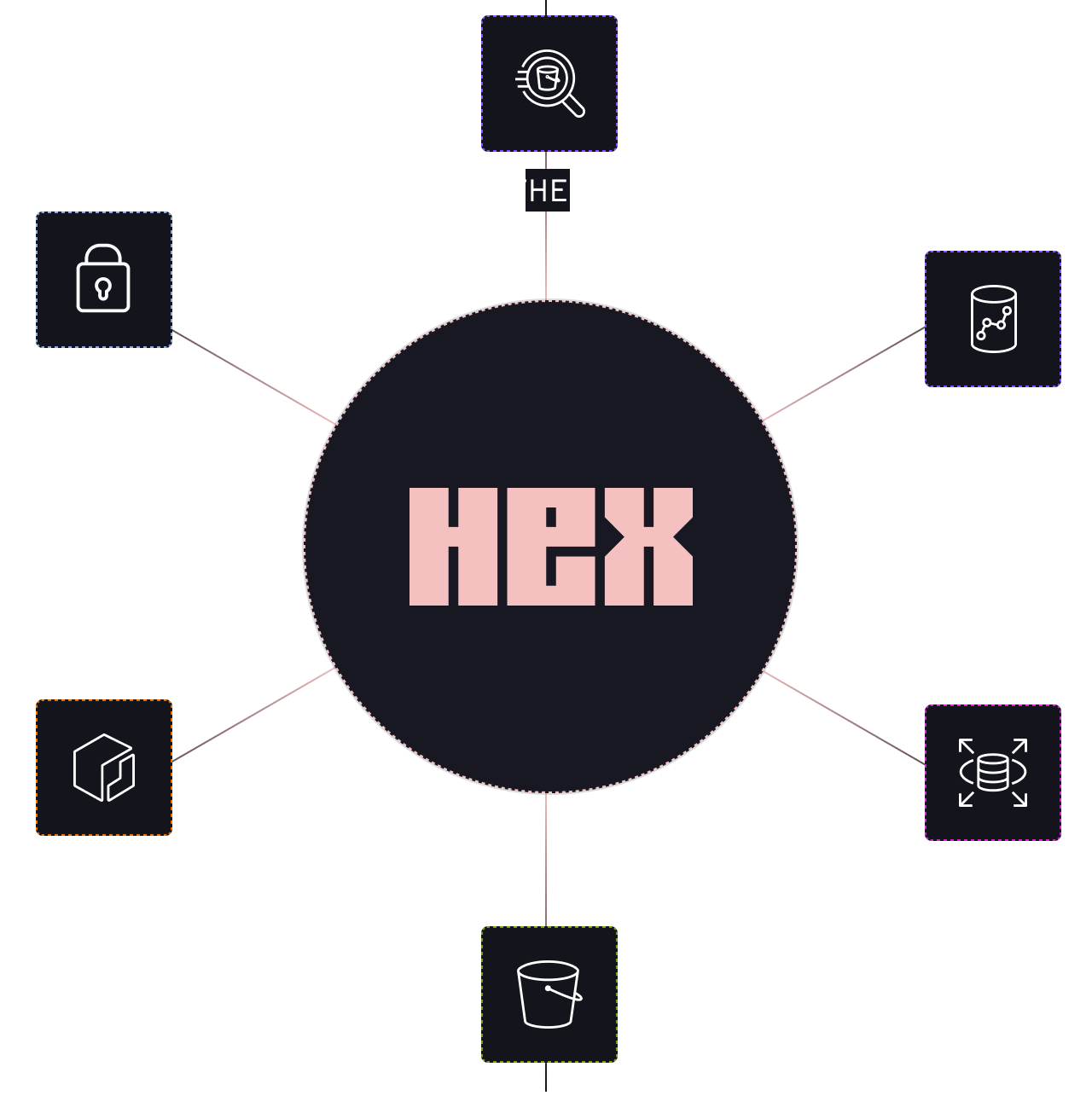
AWS connections
Athena
Query data stored in S3 using SQL. Athena is a good fit when your data lives in flat files or object storage and you want to get to it fast, without managing a warehouse.
Redshift
A columnar data warehouse built for complex analytics at scale. If you're deeply invested in the AWS ecosystem, Redshift's integrations with S3, Glue, and the rest of the stack make it a natural home base for large-scale data work.
RDS
Connect to MySQL, PostgreSQL, or other relational databases running on Amazon's managed infrastructure. Good for transactional data you want to bring into an analysis alongside your warehouse.
S3
Import flat files from your S3 buckets directly into a Hex notebook. CSVs, Parquet, JSON — pull them in and start working without any manual downloads.
ECR
Register custom Docker images with Hex using Amazon Elastic Container Registry. Useful for teams that need specific Python packages or system dependencies beyond Hex's default environment.
IAM role support across every AWS connection
Hex now supports IAM roles as an authentication method for all AWS integrations — Athena, Redshift, RDS, S3, and ECR. IAM roles issue short-lived, automatically rotating credentials, so there are no static access keys to store, audit, or rotate manually. More secure by default, with less ongoing maintenance. Read the changelog →