Conversational
analytics that
actually works
The promise of self-serve is finally here. Ask in plain language, get answers you trust.

“Threads taps into exactly our imagined value-add of agentic AI for self-serve analytics. It allows us to accelerate our core analytics roadmap items, and we're already seeing immediate success across the company.”
“Threads taps into exactly our imagined value-add of agentic AI for self-serve analytics. It allows us to accelerate our core analytics roadmap items, and we're already seeing immediate success across the company.”
Ask anything, from anywhere
Go from quick questions to deep analysis, wherever work happens.
Explore any kind of question
Ask simple lookups, dig into complex analysis, and explore open-ended ideas.
NexaCorp revenue trends by product line
Here's what I found in the "nexacorp_sales" tables (powered by the Galactic Sales semantic model):
- Teleportation pads — $42.3M
- Quantum drives — $38.7M
- Wormhole initiators — $33.1M
- Dark matter lasers — $28.6M
- Temporal stabilizers — $21.8M
- Anti-gravity generators — $11.2M
Ask from where you work
Get trusted answers on the fly from Claude, ChatGPT, Slack, and more.
 Show NexaCorp Q3 sales

Get me NexaCorp’s Q3 sales by product line


NexaCorp Q3 sales by product line
Here’s what I found in the “nexacorp_sales” tables:
- Teleportation field extenders — $42.3M
- Quantum drives — $38.7M
- Wormhole initiators — $33.1M


Trust every answer
Answers backed by your logic and semantics, with every step ready to inspect.
Grounded in your business
Threads draws on your definitions, metrics, docs, and more to deliver accurate answers.
Inspect the logic behind any analysis
Dig into how the agent works to see the data, context, and analysis behind each answer.
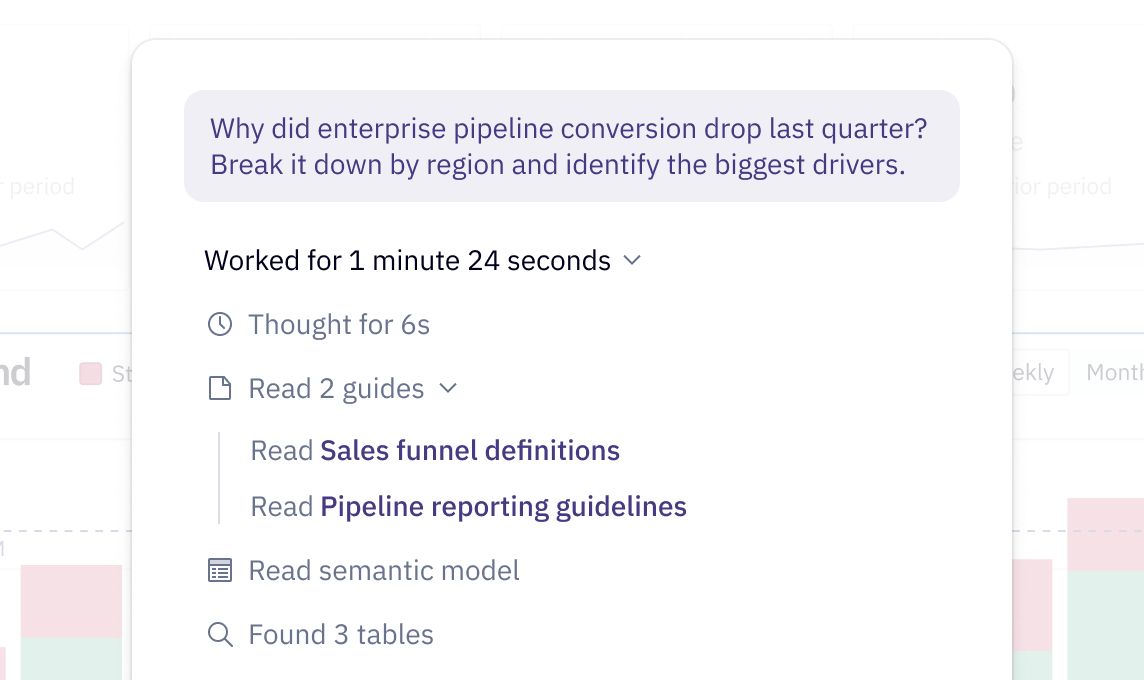
Go beyond the conversation
Why bury insights in a chat thread? Make them interactive and reusable for everyone.
From chat to dashboards, in a prompt
Convert findings into bespoke visualizations and apps, all in plain language.
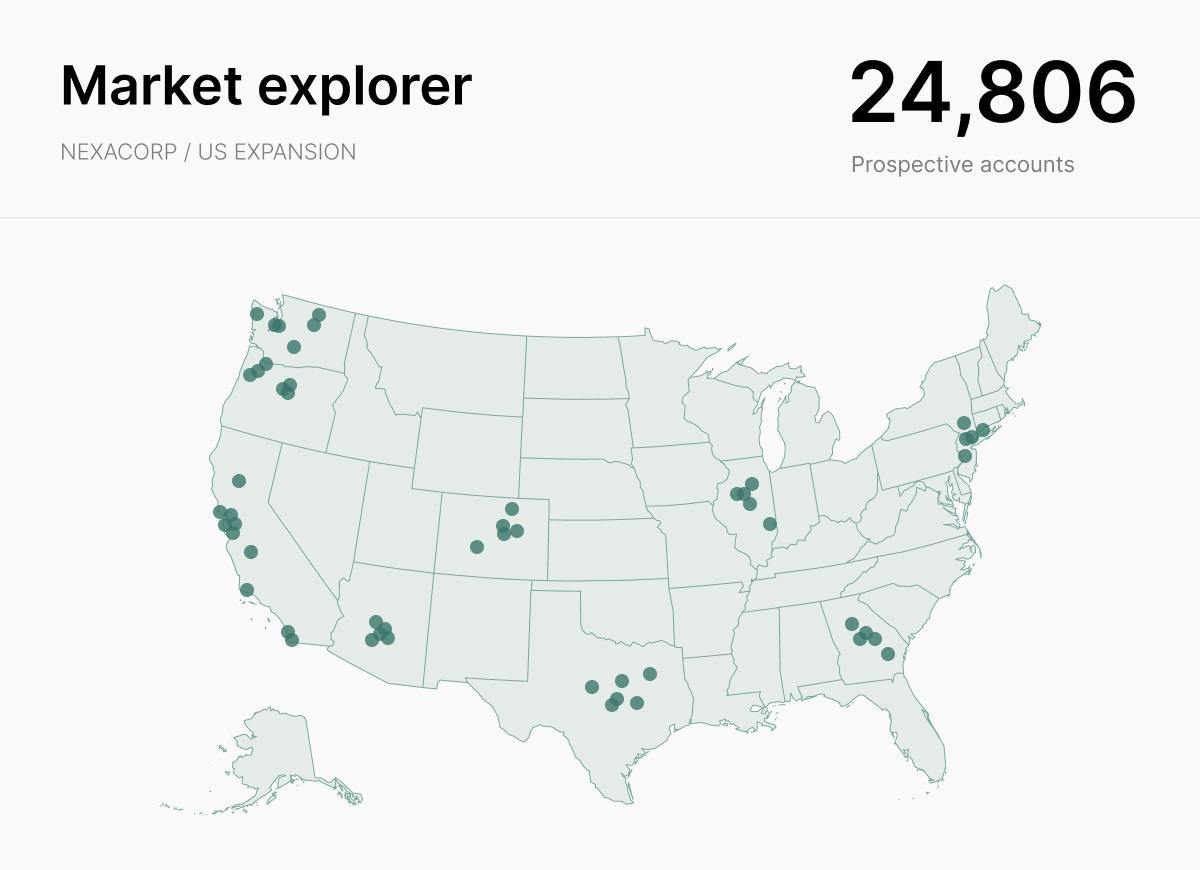


Turn recurring asks into scheduled answers
Run the Hex Agent on a schedule and deliver fresh answers to email or Slack automatically.
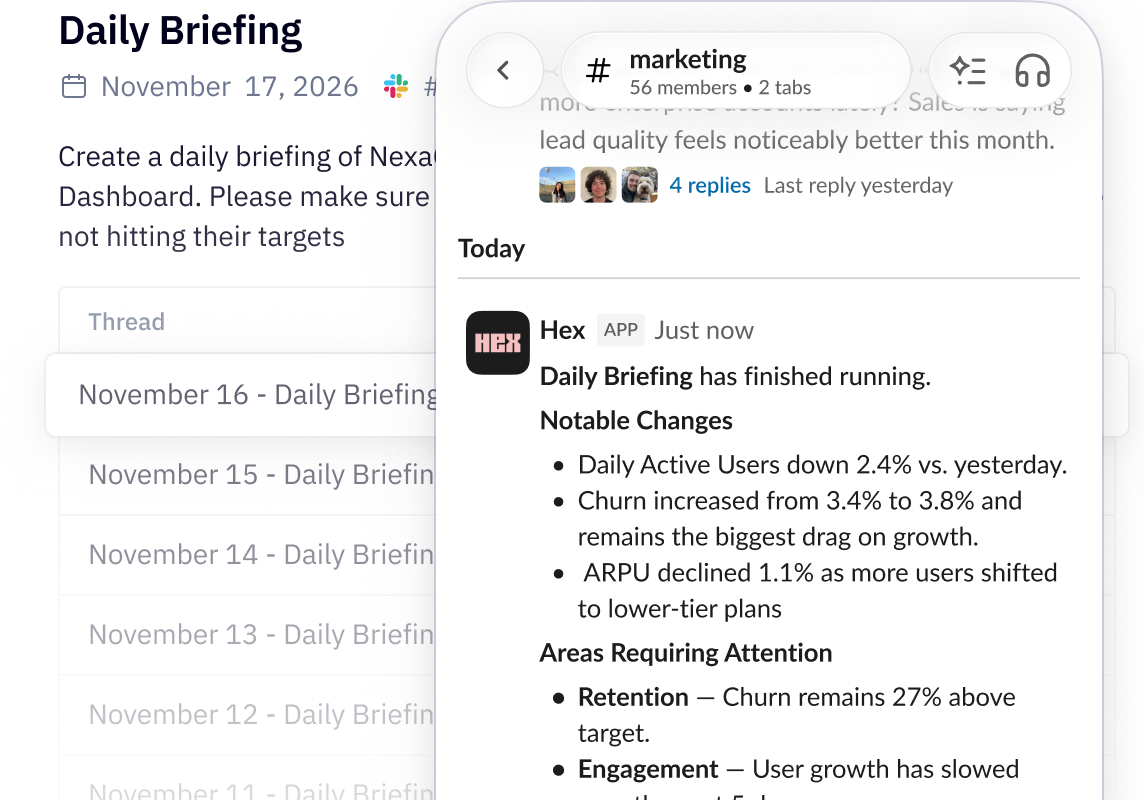
"Threads taps into exactly our imagined value-add of agentic AI for self-serve analytics. This will allow us to accelerate many of our core analytics roadmap items, and we're already seeing immediate success across the company.”

"We spend a lot of time investigating edge cases in metrics. Just today, Threads saved me having to dig into the cause of a metric issue and saved me 20 minutes, it makes us so much faster at this type of work.”

"We're really excited by how stakeholders have been using Threads for self-serve analytics. The text-to-answer results leverage our semantic layer, and we can share every step of the reasoning with the relevant audience.”

"I haven’t slept much the past two days as I’ve been firing off thread after thread after thread with the Hex Agent in Slack.”

"Hex is bridging the gap between self-service data access and self-service data analytics. Threads allows my users to discover data, create charts, and even perform analysis — all via natural language.”
Give everyone trusted answers
See a demo, or learn more about how we can help.
FAQ
The Hex Agent learns your business from context your data team manages in Context Studio. Workspace rules apply to every conversation, and relevant guides are pulled in as needed. The agent also uses semantic models and table and column descriptions, prioritizes endorsed tables and projects, and searches and cites existing workspace projects. When it needs a definition that isn't documented, Hex logs a missing-context warning so the data team can fill the gap.
No. The Hex Agent can answer from semantic models or directly from warehouse tables, and it prioritizes semantic models and endorsed sources when they exist. Teams can build semantic models in Hex or sync them from dbt MetricFlow, Cube, or Snowflake Semantic Views. Many teams start by endorsing trusted tables and writing guides, then add semantic models for the metrics business users ask about most.
Asking the Hex Agent requires the Explorer role or higher; Viewers can see conversations shared with them. On Enterprise, OAuth connections run each query with the user's own warehouse login, so existing warehouse permissions apply. Otherwise, queries run on the connection's shared credentials. Admins can also exclude data from AI and mark connections as sensitive for Slack and MCP.
Hex grounds the Hex Agent in context your data team controls. Endorsed Mode limits the agent to endorsed tables, projects, and semantic models, and admins can make it the default for Explorers. Evals let the data team test the agent against set questions with pass/fail checks before users find problems. When the agent lacks a definition, gets pushback, or hits a data caveat, Hex logs a warning for review.
Every conversation with the Hex Agent is backed by a Hex project, so people on the data team can open the underlying logic and inspect the SQL, Python, and results behind an answer. The agent also cites the projects it drew on. In Context Studio, admins and managers see what people ask, common topics, warnings, and feedback across Hex, Slack, and MCP, and admins can review any conversation step by step.
Yes. On Team and Enterprise plans, people can @mention the Hex Agent in Slack. Through the Hex MCP server, Claude, ChatGPT, Cursor, Glean, and other MCP clients can start conversations in Hex, using the same context and governance. Usage requires the Explorer role or higher.
The difference is everything around the model, not the model itself; Hex runs on Anthropic and OpenAI models. A chatbot wired straight to a warehouse sees raw tables. The Hex Agent works from your guides, endorsements, and semantic models, can respect each user's warehouse permissions, logs every conversation and flags issues for the data team to review, and can turn findings into persistent dashboards or scheduled tasks. Teams can still use Claude or ChatGPT as the front end via MCP.
Can't find your answer here? Get in touch.