
FOR DATA LEADERS
Unlock the speed of AI analytics
Help everyone get answers without losing sight of a single question, answer, or token.
Trusted by the revenue teams defining what's next

"With Hex’s Notebook Agent, I never have to build another chart again? What a dream come true."
Rie McGiwer and Molly Jane Nicholas AI Insights Researcher and Senior Researcher

"Most data teams are stuck answering ad hoc questions. Hex flipped that for us. Now the business answers its own questions, and I focus on building systems that scale."
Kenny Ning and David Dorman Head of Data and VP of Marketing and Growth

"We like to embed Hex dashboards where teams work."
Ian Macomber Head of Data and Analytics Engineering


"I wrote zero SQL by hand, absolutely zero. Hex is the single most useful and magical tool that has ever existed to make my job better in 20 years."
Tim Frietas Product Manager



Say goodbye to your queue of tickets
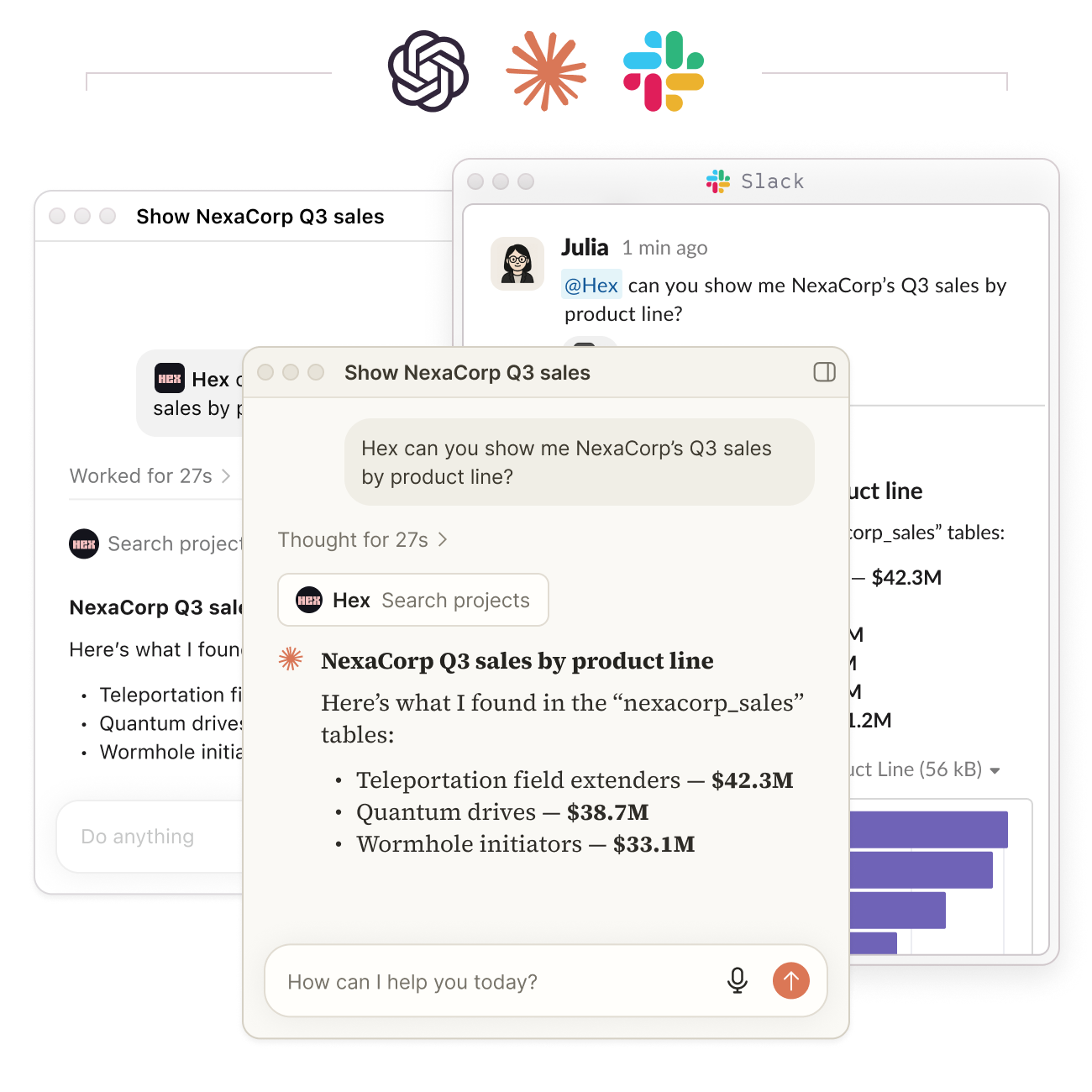
Self-serve analytics that actually sticks
Your stakeholders want an answer in whatever window they already have open — Slack, data apps, Claude, ChatGPT, or any MCP-connected system. Give them self-serve without giving up permissions, context or controls.
"Hex unlocked silos of data, allowing teams to find answers to questions with data they couldn’t access before."

Move from one-off analyses to durable data apps
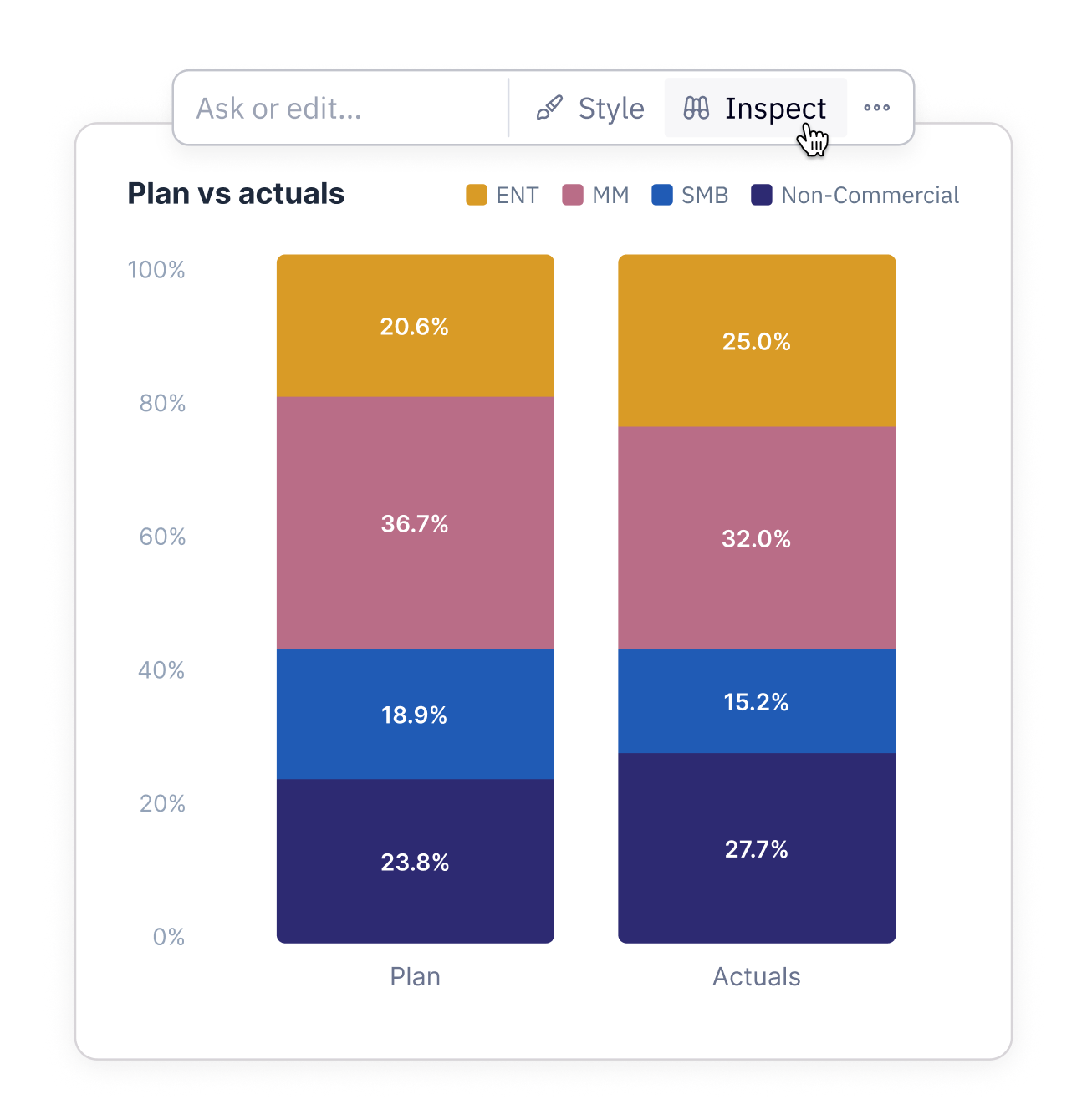
Let anyone build analyses your team can easily inspect, compare, and improve
Every conversation in Hex is a project that you can open, check, and turning into a reusable, governed artifact. Endorse your top loved apps so that their logic joins your context, so the next question starts from work you've vetted.
"Product managers and data scientists now co-create inside the same Hex notebook — sketching ideas, refining metrics, and seeing results in real time."
Start with the context you already have
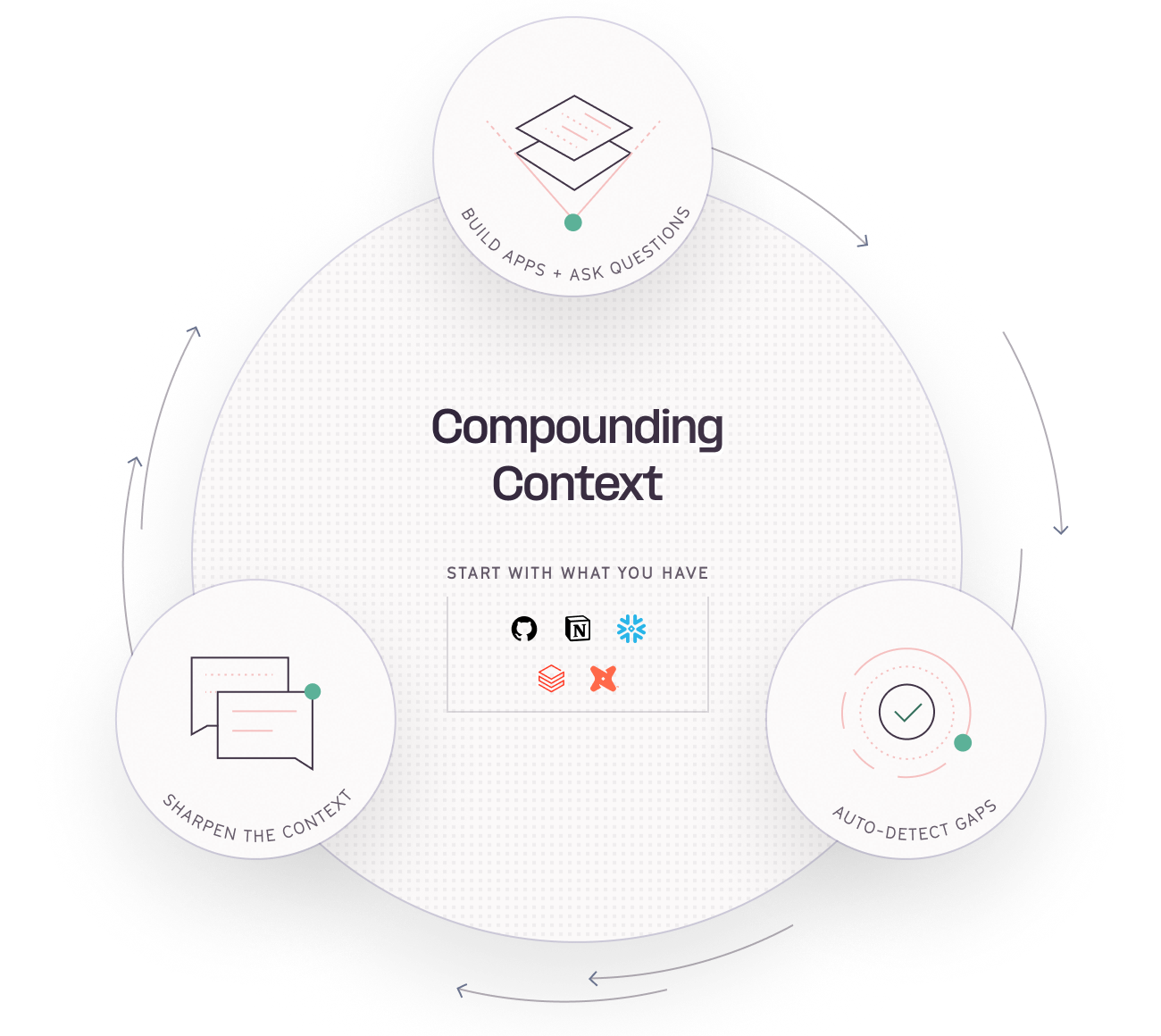
Improve your context with every question
Connect Hex to the the context you've already built: table descriptions, dbt models, docs in Notion, rules in your repos. Then Hex observes it’s own answers, finds gaps and provides Suggestions for fixes that would help improve answers the most.
"Context Studio changed how we manage agent performance. It surfaces gaps, proposes fixes, and suggests exactly where to add context. The agent improves without me auditing every conversation."

What is AI already telling your stakeholders about your data?
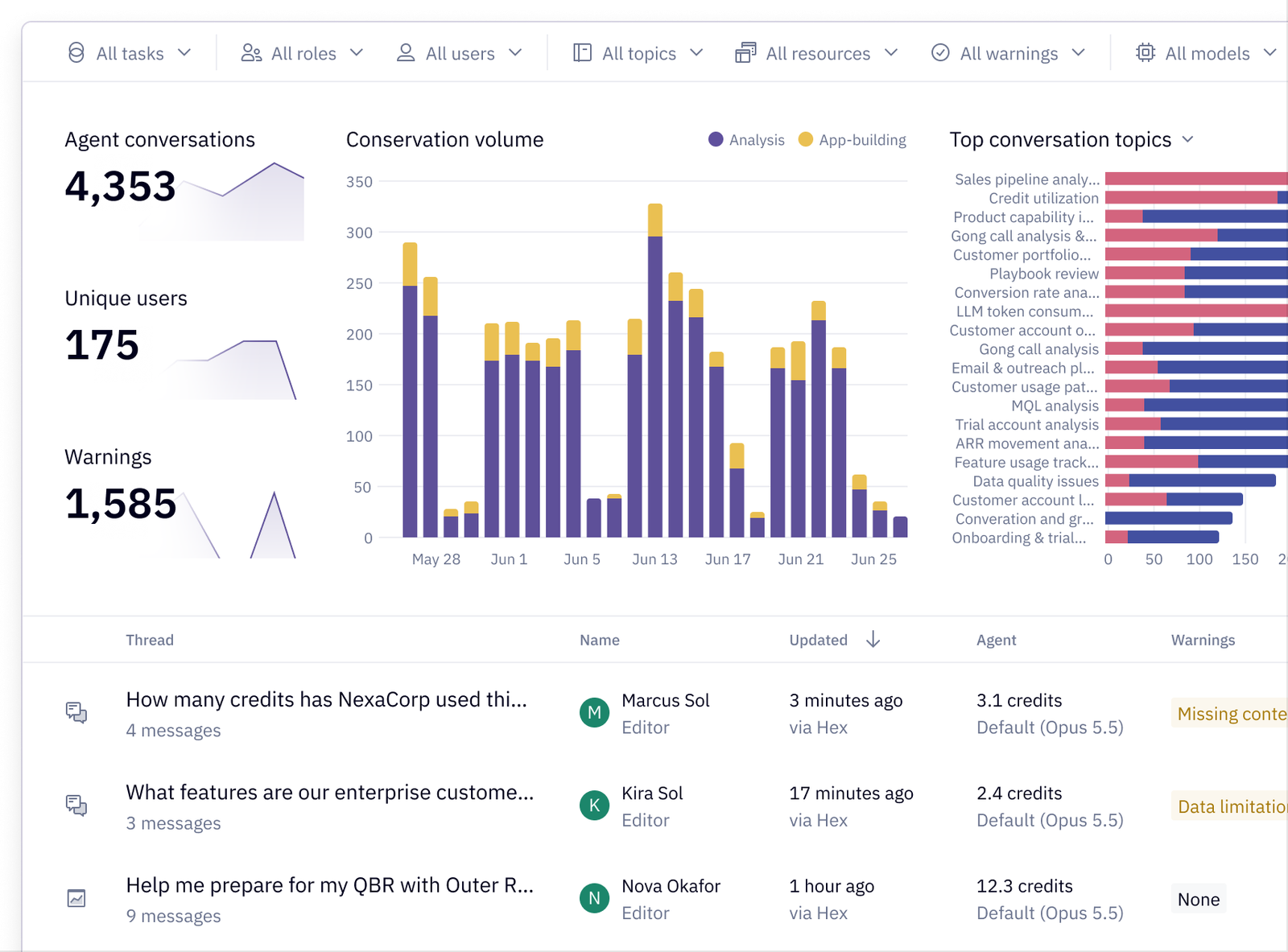
Govern every question, answer, and credit used
In Hex you can see all questions, even from external agents, which model it used, and which tables it used and which metric definitions. Trace every answer back to which data and context the agent pulled from to fix expensive or slow responses to your team.
"Hex is where we go to understand the deep nuances of what's happening — and then act on them before anyone else sees it coming."

Where to start

Building a winning data analytics & AI adoption strategy
A phased framework for rolling out AI analytics your team can trust.

Before you build that data agent, I have notes.
Build versus buy for a data agent, and what you’re signing up for.
Give every team answers, and keep trust at the center
FAQ
Yes. Business users with the Explorer role or higher can ask the Hex Agent questions in plain English and get answers drawn from semantic models and trusted warehouse tables, without touching code. Viewers can use published data apps and see conversations shared with them. Analysts work in notebooks; apps and the Hex Agent are how that work reaches the business.
Both. Many teams start by running Hex alongside Tableau or Looker, then consolidate as dashboards move over. Hex covers the full workflow, from SQL and Python analysis to published dashboards and plain-English questions through the Hex Agent, so teams can retire tools over time instead of adding another one to manage.
It depends on scope, and the fastest migrations start by triaging. Many teams find a large share of their dashboards haven't been opened in months. Redis went from 1,000 dashboards to about 150 in Hex in six months. Hex's migration skills, run from a coding agent like Cursor or Claude Code with the Hex CLI, read a Tableau workbook or LookML and rebuild each dashboard as an app on SQL you can inspect.
No. Neo Financial's team saw building semantic models across every domain as a blocker, but the Hex Agent worked well with well-documented metadata: table descriptions, column definitions, and endorsed datasets. Teams can start by endorsing tables they already trust, add workspace rules for business conventions, and layer in semantic models over time. Context Studio's suggestions show what context to add, based on real agent conversations.
It depends on how the connection is set up. With OAuth connections (on an Enterprise plan), Hex runs every query under each user's own warehouse identity, so their existing Snowflake or BigQuery permissions apply to the agent too. With a shared service-account connection, the agent has whatever access that connection has. Schema filtering and data-connection access in Hex narrow it further.
Hex grounds the agent in context the data team controls, managed in Context Studio. Admins and Managers endorse trusted tables, projects, and semantic models, and Endorsed Mode limits the agent to those assets. Guides and workspace rules define business terms. Evals score answers against rubrics to catch regressions, and Observability shows what people ask, common topics, and where answers fall short.
Hex gives the agent the business context and controls a general assistant doesn't have. Hex uses Anthropic and OpenAI models, adding your semantic models, endorsements, guides, evals, and visibility into what people ask. Results become shareable projects and apps. It doesn't have to be either/or: Hex's MCP server lets Claude and Cursor start conversations inside your Hex workspace.
Hex prices seats by role. Admins, Managers, and Editors use Author seats, Explorers use Explorer seats, and Viewer seats may be free or paid depending on plan. Agent usage runs on credits that each Editor and Explorer seat receives monthly, and admins can buy pooled add-on credits. On Enterprise, bringing your own model-provider key means usage doesn't draw down credits. See hex.tech/pricing for current plans.